Comprehensive Bovine Embryo Transfer Training Course (Conventional Flush)
Course Info

Our 4.5-day (50 hour) Comprehensive Bovine Embryo Transfer Training Course is a fully immersive, hands-on experience designed for beef and dairy producers who want to perform embryo transfer on their own cattle and veterinarians looking to add embryo transfer services to their practice. This course blends focused classroom instruction with extensive practical training, including practice using cow models and reproductive tracts, full laboratory setup with live embryos, and real-time embryo transfer and flushing in live cattle. From day one, students work through the entire conventional embryo transfer protocol using commercial-standard equipment and techniques.
By the end of the week, participants will have hands-on experience in palpation, CL identification, flush catheter placement, donor flushing, embryo searching and grading, embryo freezing and thawing, and embryo transfer. You’ll be exposed to all embryo stages commonly encountered in a commercial ET program and leave with the confidence, efficiency, and practical skill set needed to independently schedule and perform traditional embryo transfer procedures.
Certificates of Completion are given to students who complete the course and demonstrate an understanding of the theory & practical techniques of Bovine Embryo Transfer (ET).
What You Will Learn in the ET course:
- Conventional flushing
- How to search, manipulate and classify embryos.
- Procedure for loading embryos into straws for freezing or transfer.
- How to recognize cryoprotectant in order to know proper embryo thawing procedure.
- How to properly freeze bovine embryos.
- How to locate and identify ovarian anatomy.
- How to transfer bovine embryos.
- Recipient management before and after transfer.
- How to setup donor and recipient schedules.
- Methods of estrous synchronization and superovulation protocols.
- Proper completion of embryo transfer paperwork and documentation using International Embryo Technology Society guidelines.
- We also show you where to purchase all the supplies and equipment that will be needed to successfully perform embryo transfer.
Class Size:
Limited to 9 students maximum, 5 minimum
Class size is intentionally limited to ensure personalized instruction, maximum hands-on time, and direct instructor feedback.
Instructors
All of our courses are taught by industry experts — instructors who perform AI, embryo transfer and OPU commercially, not just in the classroom. You learn the techniques the way they are actually done in the field, along with the practical advice that comes from years of doing the work.
Key Benefits of Embryo Transfer
- To produce more calves from a valuable cow. Donors average between 7-8 usable embryos per flush (range 0-52 in our experience). The average donor can be superovulated successfully up to 6 times per year although there is considerable variation between donors. Pregnancy rates should average 60% in beef, and 70% in dairy cattle.
- Changing from grade cattle to pure-bred animals is less expensive using embryo transfer than buying pure-bred cattle.
- Circumvention of some types of infertility can be accomplished using embryo transfer techniques.
- More calves are produced per dose of semen. Three doses of semen are sufficient per superovulation, which will produce an average of 3.5 calves from fertile donors.
- Prevent disease transmission
- Research tool
- Embryos are a safe and efficient method of exporting and importing genetic material.
- Testing for undesirable recessive traits in the dam.
- To obtain bull calves from top cows for young sire programs which identify the best bulls.
Course Syllabus
Each day of the Comprehensive Embryo Transfer Course consists of lectures, labs, and chute time. Students are taught bovine artificial insemination, embryo recovery (flushing), embryo freezing, embryo thawing, and embryo transfer. Students also learn how to properly use a microscope for embryo identification, embryo handling, and embryo grading.
No successful course on embryo transfer can be given without presenting the student with freshly superovulated cows to provide ample opportunities to experience palpating superovulated ovaries. Therefore, we provide freshly superovulated cows, giving the student the opportunity to practice sufficient flushing & palpation. Frozen-thawed embryos are available for additional practice whenever needed.
Subjects Taught:
- All techniques needed to perform conventional embryo collection and transfer
- Selection of donors & recipients — genetic & physical aspects
- Management and nutrition of donors
- Reproductive physiology
- Synchronization of donors and recipients using prostaglandins, progesterones & GnRH
- Superovulation — use of follicle stimulating hormones, follicular maturation, ablation & ovulation
- Heat detection methods
- Breeding strategies and techniques
- Methods of embryo & egg recovery
- Transferring embryos — palpation of cervix, uterus, ovaries, follicles & corpora lutea
- Description, preparation & care of stereozoom microscopes
- Location, manipulation & classification of embryos
- Sanitation of embryos for domestic use & for export
- Preparation of frozen-thawed embryos for transfer
- Embryo transfer lab setup
- Record keeping
- All equipment and supplies needed to perform ET
An embryo transfer textbook is included with the course.
-
Days 1–3
Morning · classroom
- Lectures and PowerPoint presentations covering all aspects of embryo transfer protocols and techniques
- Practice flushing on cow reproductive tracts
- Searching, manipulating and grading embryos using a stereozoom microscope
- Loading embryos in straws for fresh transfers
- Identifying which cryoprotectant was used to freeze an embryo so you can thaw it properly
- Practice freezing and thawing embryos
- Methods of estrous synchronization and superovulation, frozen transfers and protocols
- Setting up donor and recipient schedules
Afternoon · at the chutes
- Passing ET guns
- Palpating ovaries to find active CLs and identify follicular cysts
- Catheter placement
- Flushing
-
Day 4
Morning · classroom
- Lecture
- Practice flushing on cow reproductive tracts
- Practice embryo handling
- Practice embryo freezing
Afternoon · at the chutes
- Students flush superovulated cows to collect embryos, then freeze the embryos collected
-
Day 5
Review day
- This is a review day — students choose what they want to work on
- A lot of practice tips!
Note: All students will be at different levels of experience, there are two chutes for everyone to be able to work on whatever they would like, along with reproductive tracts and models in the classroom. While we have a schedule, the school is focused on giving every student the needed practice they require. Throughout the week students will be able to choose what they would like to focus on and practice during the time at the chutes.
Course Hours
- Days 1–4
- 8:00 AM – 6:30 PM
- Day 5
- 8:00 AM – 12:00 PM
Veterinarians needing the full 50 hours of CE credit finish at 6:30 PM on day 5.
Prerequisites
Competence in AI (artificial insemination) is required. For those students who need training in AI we offer a combined AI & ET training course. The AI training portion is a 1.5 day school held the two days prior to the embryo transfer school. Then the student continues practicing AI for 5 days while learning the embryo transfer methods.
School Location
Our facilities are located in Senatobia Mississippi, just 45 minutes drive from Memphis International Airport. Students flying in to attend our school will need to fly into Memphis International Airport.
View Larger Map
Transportation & Lodging Info
Transportation and lodging are not included in the cost of the course. If you are flying, fly into Memphis International Airport and rent a vehicle — the school is about a 45-minute drive from the airport. Most students stay in Senatobia or Hernando; the casinos in Tunica are another option.
Hotels, rooms & RV parks near the school17 listings with drive times, phone numbers and websitesBovine Embryo Transfer Course Schedule
Courses run Monday to Friday. Dates marked full are closed — call 662-562-0304 to be told when the next one opens.
Tuition

Registration
To register for this course click the below Register button.
Open to anyone 18 or older — no veterinary degree required.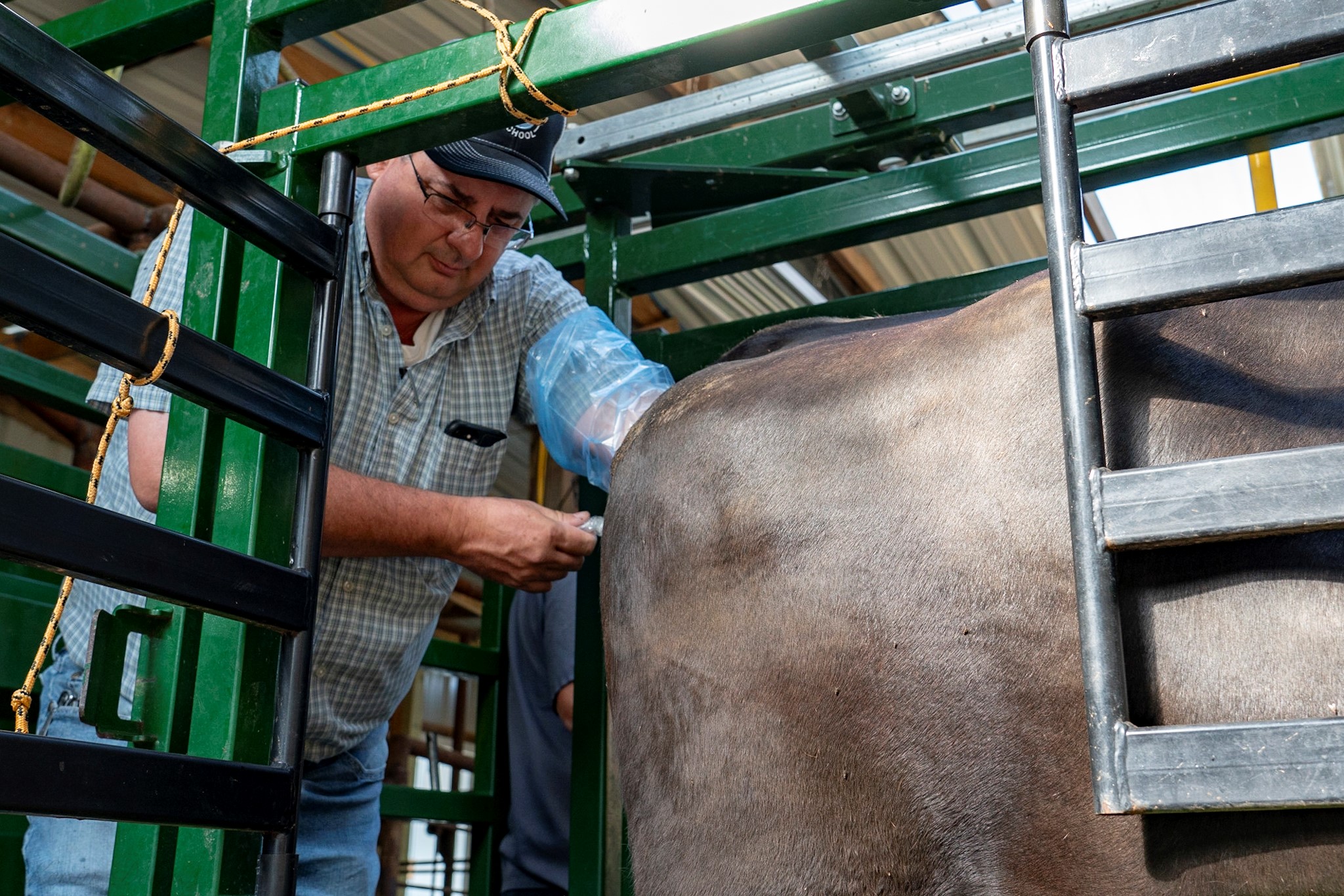

|
|
|